Disclaimer: This article is for informational purposes only and does not constitute medical advice. Always consult a qualified healthcare provider before starting any supplement regimen.
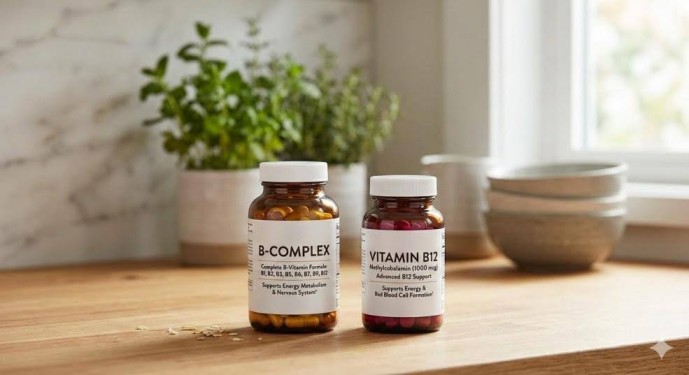
If you’ve ever stood in the supplement aisle staring at two bottles, one labeled “B12” and the other “B-Complex,” you’re not alone. A lot of people wonder, should I take B12 or B complex? The answer depends on your health goals, diet, and what your body actually needs. Let’s break it all down in simple terms.
What Is Vitamin B12?
Vitamin B12 (also called cobalamin) is a single B vitamin that plays a crucial role in your body. It helps:
- Form red blood cells and prevent anemia
- Support brain and nerve function
- Synthesize DNA
- Boost energy metabolism
Your body can’t make B12 on its own, so you have to get it from food (like meat, eggs, and dairy) or supplements. Vegans, vegetarians, older adults, and people with digestive issues are especially at risk of B12 deficiency.
According to the National Institutes of Health (NIH), around 6% of adults under 60 and nearly 20% of adults over 60 are deficient in B12. That’s a significant number of people who could be missing out on a vital nutrient.
What Is a B-Complex Supplement?
A B-Complex supplement contains all eight B vitamins bundled together:
| Vitamin | Key Role |
| B1 (Thiamine) | Energy production, nerve function |
| B2 (Riboflavin) | Cell growth, energy metabolism |
| B3 (Niacin) | DNA repair, cholesterol management |
| B5 (Pantothenic Acid) | Hormone production, metabolism |
| B6 (Pyridoxine) | Immune function, mood regulation |
| B7 (Biotin) | Hair, skin, and nail health |
| B9 (Folate/Folic Acid) | Cell division, pregnancy health |
| B12 (Cobalamin) | Nerve health, red blood cells |
So when comparing B complex vs B12, think of it this way: B12 is one ingredient, and B-Complex is the whole recipe.
Is B Complex the Same as B12?
This is one of the most common questions people ask: is B complex the same as B12? The short answer is no.
B-Complex contains B12 as one of its eight components, but it is not the same thing. If you take a B-Complex, you’re getting B12 plus seven other essential vitamins. If you take a B12 supplement on its own, you’re getting just that one vitamin, often at a higher, more targeted dose.
Difference Between B12 and B-Complex: Key Comparisons
Understanding the difference between B12 and B complex helps you make a smarter choice for your health. Here’s a quick side-by-side breakdown:
| Feature | B12 Supplement | B-Complex Supplement |
| Number of vitamins | 1 | 8 |
| Best for | Targeted B12 deficiency | Overall energy and wellness |
| Vegan/vegetarian support | Yes | Yes (check label) |
| Dosage control | High and precise | Spread across all B vitamins |
| Pregnancy support | Partial | More complete (includes folate) |
| Cost | Generally lower | Slightly higher |
The difference between B complex and B12 really comes down to specificity versus comprehensiveness. One is laser-focused; the other covers a wider range of needs.
Who Should Take B12 Only?
You may benefit from a standalone B12 supplement if:
- You’ve been diagnosed with a B12 deficiency
- You follow a vegan or vegetarian diet
- You’re over 50 (stomach acid decreases with age, making B12 absorption harder)
- You take metformin (a diabetes medication that depletes B12)
- You’ve had gastric bypass surgery
In some cases, oral supplements aren’t enough to restore levels quickly. This is where IV therapy becomes a powerful option. Services like drip IV infusion deliver B12 directly into your bloodstream, skipping the digestive system entirely for faster, more complete absorption. It’s especially useful for people who have absorption issues or need rapid replenishment.
Who Should Take B-Complex?
A B-Complex supplement may be the better fit if:
- You feel chronically tired or stressed
- Your diet is poor or restrictive
- You want to support skin, hair, and nail health (thanks to biotin)
- You’re pregnant or planning to conceive (folate is critical for fetal development)
- You’re recovering from alcohol use (alcohol depletes multiple B vitamins)
- You want comprehensive nutritional support
Speaking of recovery, if you’ve ever felt wiped out after a night of drinking, it’s partly because alcohol depletes B vitamins rapidly. An IV drip for hangover can restore B vitamins along with hydration and electrolytes, helping you bounce back much faster than oral supplements can.
B12 vs B complex: Which One Actually Boosts Energy?
Both can help with energy, but in different ways. B12 is directly involved in converting food into usable energy and supporting red blood cell production. If your fatigue is specifically caused by a B12 deficiency, a B12 supplement will likely give you a noticeable boost.
However, if your low energy is due to a broader nutritional gap like low B1, B2, or B5, then a B-Complex will do more for you. The best way to know for sure is to get a blood test and check your actual levels.
The Role of IV Therapy in Delivering B Vitamins
One of the biggest challenges with oral B vitamin supplements is absorption. Your gut can only absorb a limited amount at a time, and certain health conditions can make absorption even less efficient. This is where IV therapy comes in as a genuinely effective solution, and it’s exactly what Drip IV Therapy specializes in.
Drip IV Therapy delivers B vitamins directly into your bloodstream at 100% bioavailability, meaning your body gets every bit of what’s administered. Unlike popping a pill and hoping for the best, Drip IV Therapy’s professional infusions are designed to give you fast, measurable results. Whether you’re dealing with a confirmed deficiency, chronic fatigue, post-illness recovery, or simply want to feel your best, their IV nutrient therapy is a fast and reliable option trusted by real people looking for real results.
Drip IV Therapy now offers IV treatments that combine B vitamins with other key nutrients like vitamin C, magnesium, and amino acids for a full-body wellness boost. These customized drips can be tailored to your specific needs, whether that’s energy, immunity, hydration, or recovery.
IV therapy is particularly beneficial for:
- People with digestive disorders like Crohn’s disease or IBS
- Older adults with reduced stomach acid
- Athletes looking for faster recovery
- Anyone who needs a quick energy or immunity boost
- Individuals recovering from illness, surgery, or heavy alcohol use
According to Harvard Health Publishing, while food remains the gold standard for nutrients, supplements and targeted therapies can fill critical gaps when the body can’t absorb enough on its own.
Can You Take Both B12 and B-Complex Together?
Generally, yes, but it’s worth checking with your doctor first. Since B12 is water-soluble, your body flushes out any excess through urine. However, taking very high doses of certain B vitamins (especially B6) over long periods can cause issues like nerve damage. Always follow the recommended dosage on the label or your healthcare provider’s guidance.
Quick Summary: Which Should You Choose?
- Choose B12 if you have a confirmed deficiency, follow a plant-based diet, or are over 50.
- Choose B-Complex if you want overall energy support, are pregnant, or have a generally poor diet.
- Consider IV therapy if you want fast, direct absorption without relying on the digestive system or need results quickly.
Frequently Asked Questions (FAQs)
Can I take B-Complex and B12 at the same time?
Yes, you can. Since B vitamins are water-soluble, your body removes what it doesn’t use. But check with a doctor if you’re taking high-dose supplements for an extended period.
What is the difference between B12 and B-Complex for energy?
The difference between B12 and B complex for energy is focus versus range. B12 targets one specific cause of fatigue (B12 deficiency), while B-Complex addresses multiple nutritional gaps that can cause low energy.
How do I know if I need B12 or B-Complex?
A simple blood test can check your B12 levels. If only B12 is low, take B12. If your diet is generally poor or you’re under chronic stress, a B-Complex is likely a better fit.
Is IV therapy better than taking B vitamin supplements orally?
For most healthy people, oral supplements work fine. But if you have absorption issues, a digestive condition, or need faster results, IV therapy delivers B vitamins at full bioavailability directly into your bloodstream, making it significantly more effective in those situations.