

Can a hangover IV really speed recovery? Learn how IV hydration works, what it costs, the risks, and how it compares to at-home remedies.
Table of Contents
- How a Hangover IV Works and What It Delivers
- Does IV Hydration Cure Hangovers? What the Evidence Says
- How Long Does a Hangover IV Take to Work?
- Hangover IV Risks, Safety Screening, and Red Flags
- What to Expect During a Mobile Appointment
- Hangover Recovery at Home: What Actually Helps
- IV Treatment vs. At-Home Options: How to Choose
- Frequently Asked Questions
Last Updated: October 4, 2026
How a Hangover IV Works and What It Delivers
IV therapy for fast hangover recovery delivers fluids, electrolytes, and vitamins straight into the bloodstream, bypassing the digestive system entirely. At Drip IV Therapy, we administer these drips in your home, hotel, or office, and the appeal is simple: hydration and nutrient delivery start within minutes rather than hours. (Source: National Institute on Alcohol Abuse and Alcoholism (NIAAA) information on alcohol’s effects)
A typical drip combines three components:
- Fluids: Sterile saline or a similar solution to address dehydration from alcohol’s diuretic effect
- Electrolytes: Sodium, potassium, and magnesium lost through increased urination
- Vitamins: Often B vitamins, vitamin C, and sometimes zinc or antioxidants
Alcohol suppresses vasopressin, the hormone that tells your kidneys to hold onto water. The result is frequent urination, dehydration, and a body short on the electrolytes it needs for cellular function and energy metabolism. An IV replaces those losses directly.
Fluids, Electrolytes, and Vitamins in a Typical Drip
The formulation matters more than the drip itself. A basic saline bag rehydrates, but it won’t touch the nausea, headache, or fatigue that make a hangover miserable.
Some formulations include anti-nausea medication, prescribed after a medical assessment. The NIH Office of Dietary Supplements guidance on B vitamins explains what each vitamin actually does in the body, which is worth reading before you assume a drip is a cure-all.
Does IV Hydration Cure Hangovers? What the Evidence Says
No. IV hydration does not cure a hangover, because dehydration is only one part of the problem. Hangovers stem from multiple causes: dehydration, electrolyte loss, inflammation, disrupted sleep, and the toxic byproducts of alcohol metabolism.
This is where most marketing gets ahead of the science. A drip can relieve dehydration symptoms like thirst, headache, and fatigue. It cannot reverse the inflammatory response or the metabolic disruption that alcohol causes.
What the Evidence Actually Supports
It helps to separate the claims into two buckets: what rehydration reliably does, and what the broader “hangover cure” pitch implies but does not prove.
Well-supported by established physiology:
- Fluid replacement for dehydration. Alcohol suppresses vasopressin, the hormone that signals your kidneys to conserve water. The resulting fluid loss is real, and intravenous saline or a balanced solution replaces it directly. This is the strongest, least controversial benefit.
- Electrolyte correction. Sodium, potassium, and magnesium are lost through increased urination. Replacing them addresses the fluid-balance and neuromuscular symptoms that accompany depletion.
- Symptom relief when oral intake fails. For someone who is vomiting and cannot keep fluids down, an IV is a practical route to rehydration that oral fluids cannot match.
Plausible but not established as a hangover cure:
- Vitamin infusions as a recovery accelerator. B vitamins and vitamin C support normal energy metabolism and antioxidant function, but there is no strong clinical evidence that infusing them shortens a hangover or reverses alcohol’s effects. The NIH Office of Dietary Supplements guidance on B vitamins explains what these vitamins do in the body, which is worth reading before assuming a drip is a cure-all.
- Anti-nausea medication. These can ease nausea and vomiting, but they treat a symptom rather than the underlying hangover process.
- “Detox” or “reset” language. Alcohol metabolism happens in the liver at a rate largely set by biology, not by what is dripped into a vein. No infusion speeds that clearance.
Realistic Outcome Expectations
A reasonable way to frame it: an IV can make you feel better faster by correcting the dehydration and electrolyte deficits that amplify hangover symptoms. It will not erase the hangover, and it will not sober you up.
Most practitioners find that patients who are significantly dehydrated notice the clearest difference, while those who are only mildly depleted may feel little beyond the placebo effect of a clinical setting.
IV therapy is best understood as targeted rehydration and symptom support, not a cure. The evidence is strongest for fluid and electrolyte replacement and weakest for the idea that vitamins or additives reverse a hangover.
That doesn’t make IV therapy useless. For someone who is badly dehydrated and nauseated, oral rehydration may be impossible to keep down. In that case, intravenous fluids offer a practical path to rehydration when drinking water isn’t an option. Just go in with realistic expectations: relief, not erasure.
How Long Does a Hangover IV Take to Work?
Most people notice improvement within 30 to 60 minutes of starting IV therapy for fast hangover recovery, with the full session running about 45 to 90 minutes depending on the formulation and how dehydrated you are.
The timeline looks roughly like this:
- First 15 minutes: Fluids begin circulating; many people feel the first wave of relief
- 30 to 60 minutes: Headache and fatigue often ease as hydration status improves
- After the session: Energy and alertness typically continue improving over the next few hours
The honest caveat: how long a hangover IV takes to work depends on how much you drank, your body weight, and how depleted you were going in.
Hangover IV Risks, Safety Screening, and Red Flags
Hangover IV risks are real but manageable when a qualified clinician screens you first. The most common issues are bruising or soreness at the IV site, mild cooling from the fluids, and rare allergic reactions to specific vitamins or medications.
Safety screening is where quality providers separate themselves. Before any drip, a nurse should review your medical history, current medications, and allergies. Certain conditions matter here:
- Kidney disease, which affects how your body handles fluid and electrolyte loads
- Heart conditions, where extra fluid can strain the cardiovascular system
- Pregnancy, which changes what’s safe to administer
If a provider skips this step, walk away. A medical assessment isn’t red tape; it’s the difference between a safe treatment and an avoidable complication. At Drip IV Therapy, registered nurses perform this screening before every session.
When to Skip the Drip and Seek Emergency Care
Some symptoms aren’t a hangover at all. Get emergency help if you see confusion, seizures, slow or irregular breathing, a body temperature that’s dangerously low, pale or bluish skin, or vomiting that won’t stop.
The CDC information on alcohol poisoning symptoms lists the warning signs in detail. If you’re unsure whether you’re dealing with a bad hangover or something worse, err on the side of calling 911 or going to an emergency room.
What to Expect During a Mobile Appointment
A mobile appointment usually runs 45 to 90 minutes from setup to finish, and you spend almost all of it sitting comfortably while a registered nurse handles everything.
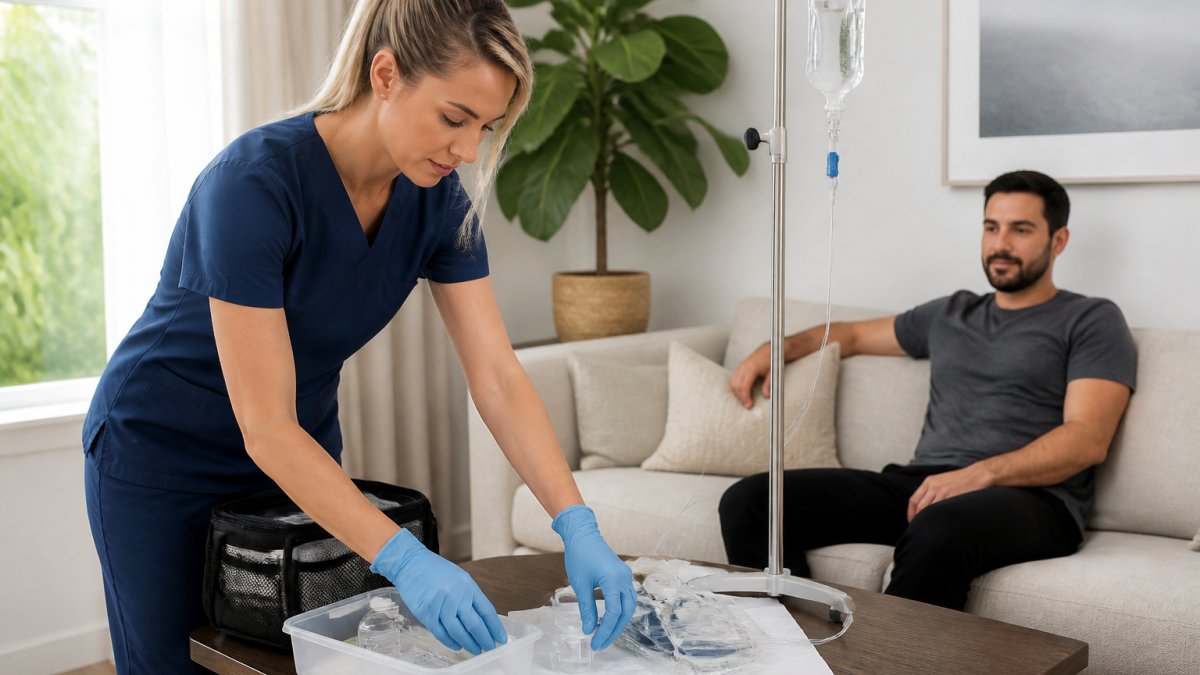
Here’s how a typical visit unfolds. The nurse arrives with the equipment, confirms your identity and health history, and checks your vitals.
A few practical notes: drink water beforehand if you can keep it down, wear something with easy arm access, and clear a small space for the nurse to work.
Hangover Recovery at Home: What Actually Helps
Home remedies won’t match an IV for speed, but several genuinely help. The goal is the same: replace fluids and electrolytes, settle your stomach, and let your body clear the alcohol byproducts.
What works:
- Water and oral rehydration solutions: Sip steadily rather than gulping, especially if you’re nauseated
- Electrolyte drinks: Better than plain water for replacing sodium and potassium
- Bland food: Toast, crackers, or bananas once your stomach settles
What doesn’t work: coffee to “sober up,” more alcohol, or greasy food as a cure. None of these speed recovery, and some make it worse. Hangover recovery at home is about patience and steady fluid replacement, not clever tricks.
IV Treatment vs. At-Home Options: How to Choose
Pick IV treatment when you’re significantly dehydrated, vomiting, or need to function within a few hours. Pick at-home rehydration when symptoms are mild and you can keep fluids down.
The more useful question is not which option is “better” but which one matches your symptoms, your timeline, and your tolerance for cost and risk. The table below breaks that down.
| Factor | IV Treatment | At-Home Options |
|---|---|---|
| Speed of relief | Often 30-60 minutes for hydration effects | Several hours of steady sipping and rest |
| Best for | Nausea, vomiting, severe dehydration, can’t keep fluids down | Mild symptoms, able to drink and eat |
| Supervision | Registered nurse, medical screening before treatment | Self-managed |
| Convenience | Comes to you; 45-90 minute appointment | Already at home; no scheduling |
| Cost | Varies widely by provider and formulation; check pricing upfront | Low; grocery-store oral rehydration solutions and electrolyte drinks |
| Risk profile | IV site bruising, rare allergic reactions, fluid load concerns for some conditions | Minimal; main risk is not seeking care when symptoms are severe |
| Time investment | Setup, treatment, and monitoring time | Passive; you rest while your body recovers |
A Practical Decision Framework
Work through these questions in order:
- Can you keep fluids down? If yes, start with oral rehydration. If you are vomiting repeatedly and cannot hold anything down, an IV is the more reliable route to rehydration.
- How fast do you need to function? If you have a flight, a meeting, or an event you cannot miss within a few hours, an IV may get you there faster. If you can spend the day resting, home care is usually sufficient.
- How severe are your symptoms? Mild headache and fatigue respond well to fluids, food, and rest. Severe dehydration, persistent vomiting, or an inability to keep anything down point toward IV treatment or, if red flags are present, emergency care.
- What is your budget? IV treatment costs vary by provider, formulation, and whether a clinician is involved. At-home options cost far less. Neither is wrong, but the value calculation depends on how much faster relief is worth to you.
- Do you have conditions that affect fluid handling? Kidney disease, heart conditions, and pregnancy change the risk calculus. If any apply, get medical guidance before choosing either route.
Where Each Option Wins
At-home care wins on cost, convenience, and low risk. It is the right default for most mild hangovers. Water, oral rehydration solutions, electrolyte drinks, bland food, rest, and time address the same underlying deficits an IV targets, just more slowly.
IV treatment wins on speed and reliability when oral intake fails. If you cannot keep fluids down, or you need to be functional quickly, the intravenous route bypasses the digestive system and delivers fluids and electrolytes directly.
If you can drink water without throwing it up, start there. If you cannot keep anything down, or you have an obligation you cannot miss, an IV is the more dependable path. For most people, the deciding factor is how fast you need to feel human again.
Neither option replaces emergency care. If you see confusion, seizures, slow or irregular breathing, or vomiting that will not stop, those are signs of alcohol poisoning, not a hangover, and they require calling 911 or going to an emergency room.
Frequently Asked Questions
Do IV drips really work for hangovers?
A hangover IV can ease some symptoms by replacing fluids and electrolytes lost through urination and vomiting, which may reduce headache and fatigue. However, alcohol also disrupts sleep, irritates the stomach lining, and produces byproducts that fluids cannot remove. Think of a drip as supportive care that may help you feel better sooner, not a switch that erases a hangover. A medical assessment before treatment helps confirm it is appropriate for you.
How long does a hangover IV take to work?
Most sessions run 30 to 60 minutes, and many people report feeling some relief during or shortly after the drip. Headache and fatigue often ease first as fluids and electrolytes reach the bloodstream, while nausea may take longer to settle. Factors like how much you drank, your hydration status, and how much sleep you got all affect timing. Oral hydration works more slowly because fluids pass through the digestive system first.
What are the risks of getting an IV for a hangover?
Common side effects include bruising, soreness, or mild bleeding at the insertion site. Less common issues include infection, fluid overload, or reactions to specific vitamins and medications. People with kidney, heart, or liver conditions, pregnant individuals, and those taking certain prescriptions may not be good candidates. A personalized safety screening and physician supervision reduce these risks, so always share your full medical history and medications before treatment.
What can I do at home to feel better after drinking?
Start with water, oral rehydration solutions, or sports drinks to replace fluids and electrolytes. Eat bland food when you can tolerate it, rest, and take an over-the-counter pain reliever for headache, following label directions. Avoid more alcohol, which delays recovery. If symptoms are severe, you cannot keep fluids down, or you notice confusion, chest pain, or difficulty breathing, seek medical care right away instead of waiting it out.
A hangover that won’t quit, a morning meeting you can’t reschedule, a body that’s running on empty: these are the moments when waiting it out isn’t an option. Drip IV Therapy brings registered nurses and pharmacist-created formulations to your home, hotel, or office, with on-demand scheduling and science-backed drips designed to rehydrate and replenish. Book now with Drip IV Therapy and get back to your day.


